51 articles to prepare your trip
In Nukus, the Savitsky Museum houses one of the world's greatest collections of Soviet avant-garde art, rescued from Stalinist censorship, alongside a remarkable collection of Karakalpak folk art.
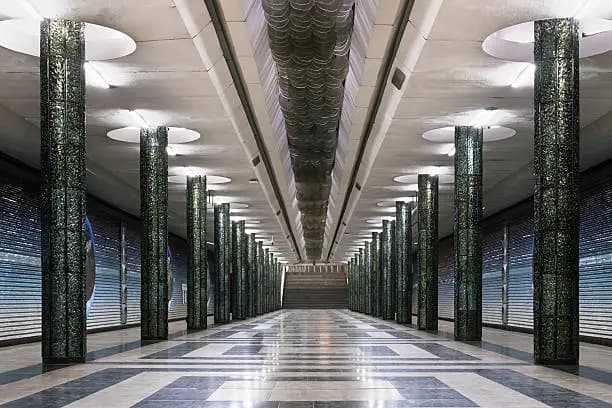
Central Asia's first metro, Tashkent's underground network is a Soviet art gallery: mosaics, colorful marble, and crystal chandeliers adorn stations with unique historical and cultural themes.
Tash-Khovli Palace, the 'stone courtyard' of the 19th century, is one of the architectural jewels of Khiva's Itchan Kala, renowned for its interior courtyards lined with blue faience tiles and galleries supported by intricately carved juniper wood columns.
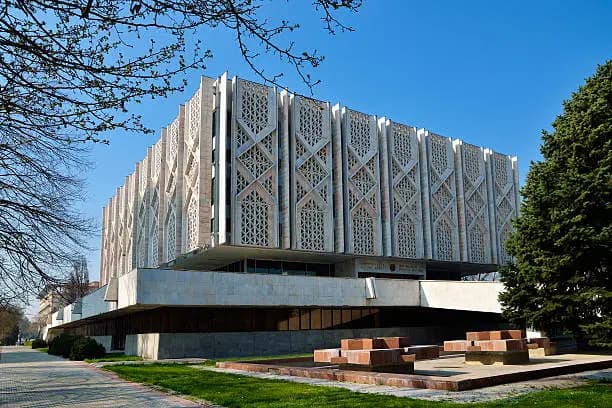
Located on Mustaqillik Square in Tashkent, the Museum of the History of Uzbekistan traces several millennia of Central Asian history: archaeology, decorative arts, the Silk Road and regional ethnography.
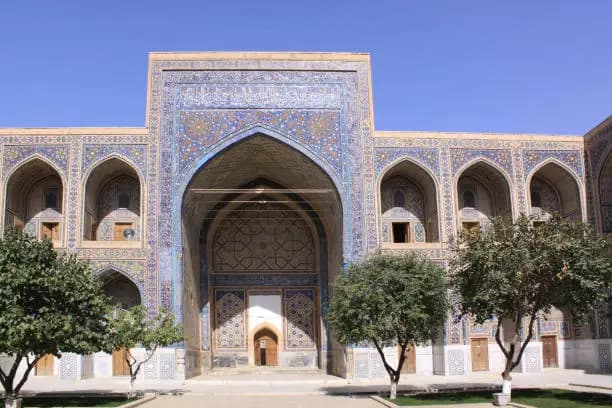
On Registan Square, the Cher-Dor Madrasah (1619–1636) stands out for its mosaics of lions and deer—rare animal iconography in Central Asian Islamic architecture.
Registan brings together three madrasas from the 15th–17th centuries around a monumental square in the heart of Samarkand. Blue ceramics, gilt details, and Timurid geometry: a UNESCO-listed ensemble and the visual symbol of Ouzbékistan.
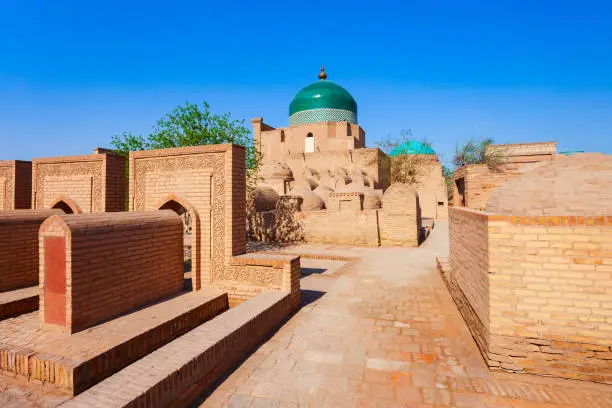
The most venerated shrine in Khiva, the Mausoleum of Pakhlavan Makhmoud brings together a dazzling turquoise dome, refined ceramics, and the tombs of the khanate's khans within the UNESCO-listed fortified old city.
In the heart of the Karakalpak desert, the Savitsky Museum in Nukus houses thousands of Russian avant-garde works forbidden under Stalin, alongside an exceptional collection of Central Asian folk art.
A late 19th-century colonial villa with sculpted ganch ceilings, housing suzani embroideries, Rishtan ceramics and ikat silks: the Museum of Applied Arts in Tashkent brings together Uzbek architecture and craftsmanship in a single place.
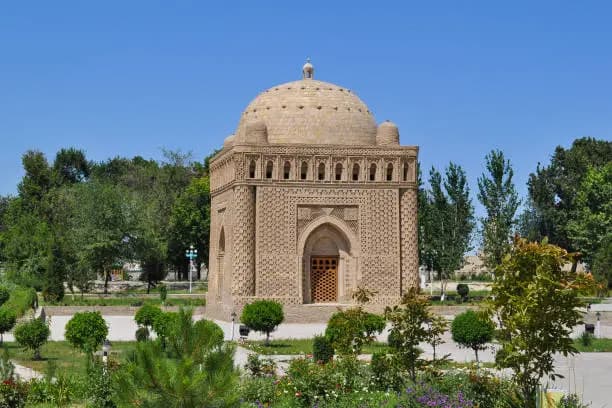
Built in the 10th century for the Samanid dynasty, this fired-brick mausoleum is one of the best-preserved medieval Islamic buildings in Central Asia, located within Samani Park in Bukhara.
Once the world's fourth-largest lake, the Aral Sea has lost over 90% of its surface. At Moynaq, rusted wrecks resting in the sand tell the story of one of the 20th century's greatest ecological disasters.
Symbol of independent Uzbekistan, Mustaqillik Maydoni Square brings together the national marble globe, illuminated fountains and the Palace of Forums at the heart of Tashkent.
A major scientific remnant from the 15th century north of Samarkand, the Ulugh Beg Observatory preserves the marble arc of its sextant and a museum of astronomical instruments.
Four covered markets dating to the 16th century in the heart of Bukhara, a living legacy of the Silk Road where jewelers, carpet merchants, and artisans continue their ancestral trades.
Toprak Kala
Fortress-palace of ancient Khorezm (1st-6th century) in the heart of the Kyzylkum desert, Toprak Kala was a royal residence and once housed the murals now displayed at the Hermitage.
Located 4 km north of Bukhara, Sitorai Mohi-Khossa Palace—summer residence of the last emirs—blends traditional décor with early 20th-century Russian influences.
On the slopes of Afrasiab in Samarkand, the Shakhi Zinda necropolis aligns eleven Timurid mausoleums crowned with blue domes, listed as a UNESCO World Heritage site.
A 12th-century minaret, grand mosque and active madrasah: Po-i-Kalon in Bukhara has been a UNESCO World Heritage site since 1993.
18 of 51 results
We use cookies to improve your experience and measure our site's audience. You can choose what you accept. Learn more.