Nukus
Nukus
Capital of Karakalpakstan, Nukus is home to the Savitsky Museum and serves as a gateway to the Aral Sea, the Khorezm fortresses, and the Kyzylkum desert.
Capital of the autonomous Republic of Karakalpakstan, a region of Uzbekistan, Nukus is a recently established city with distinctly Soviet character. Renowned for its museums, one of which is world-famous, this city makes for an interesting stop during your stay in Uzbekistan.
History
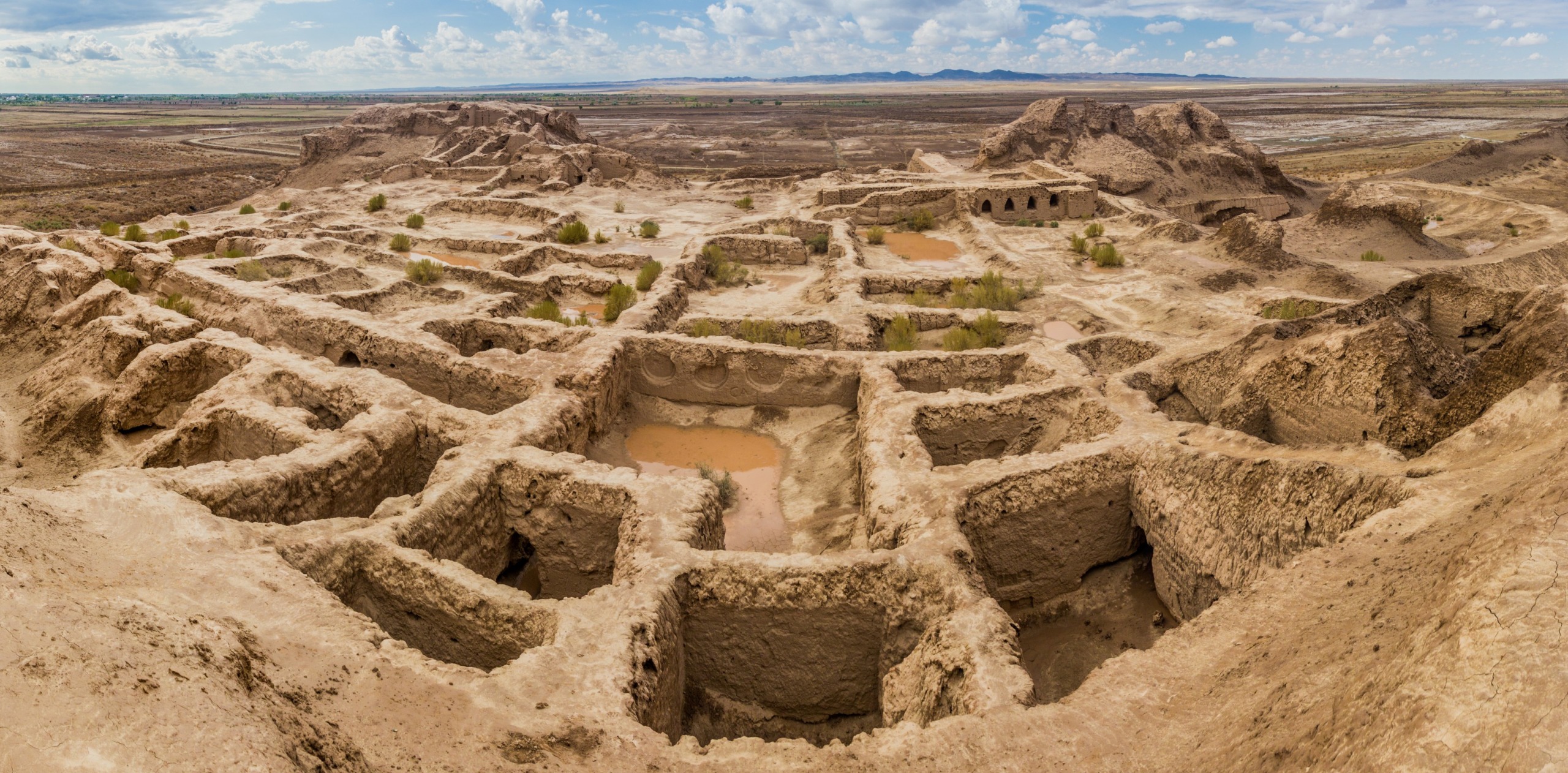
Archaeological excavations conducted at the site of the present-day city have revealed evidence of human settlement dating back to very ancient times. However, there is no proof that this was indeed the city of Nukus. In fact, Nukus is a city of recent creation. Officially, it was founded in 1860 and only achieved city status in 1932. It was not until 7 years later, in 1939, that it became the capital of Karakalpakstan. The infrastructure that adorns the city was only constructed over the last decade.
As for the city's name, it derives from Nou–kas, which means "Nine people" or "nine men". This name is connected to the city's founding story. Legend has it that the Khorezm ruler exiled 9 women from his harem to the site of present-day Nukus. Each subsequently married merchants who were passing through the city, and each gave birth to 9 boys who, according to legend, founded the city of Nukus.
Today
Capital of the autonomous Republic of Karakalpakstan (Uzbekistan's 14th administrative region), Nukus is a distinctly Soviet city with its towering apartment blocks and wide avenues. Most of these buildings are new and vacant, which might suggest the city is recent, contrary to what some scholars claim.
Nukus is the largest city in the Republic with over 300,000 inhabitants. It is surrounded by the deserts of Karakum, Kyzylkum, Aralkum and the Ustyurt Plateau, which is a true stone desert. Despite this, the capital nestles in a verdant embrace of greenery and flowers.
Unfortunately, like most cities in this part of Uzbekistan, Nukus could not escape the devastating consequences of the desiccation of the Aral Sea. A ship graveyard can even be seen here. In spite of this, the city has the appearance of a modern metropolis and continues to develop with a university, higher education institutions, and industrial enterprises.
Museums of Nukus
Nukus is renowned for its museums, one of which is world-renowned. This is the Igor Savitsky Museum. The product of the remarkable work of a Moscow-based artist after whom the museum is named, this institution houses a veritable treasure illustrating a cultural epoch from the 3rd century BC to the present day. As early as the beginning of the 1970s, the museum was already known to all specialists and art enthusiasts worldwide. The regional museum, the Berdakh Museum, is also of great interest. It displays an impressive collection of various objects discovered throughout the republic's territory.
Climate
Nukus enjoys a continental climate with hot, dry summers and very cold, dry winters. The average annual temperature is 17°C. The best time to visit is between April and July, when the average temperature hovers around 27°C.
Nukus is a very easily accessible city. Highways traverse all regions of the republic. Moreover, with the reconstruction of rail routes, the distance between Tashkent and Nukus has been reduced. Furthermore, the city can also be reached by air. Nukus Airport connects the city to Tashkent, to the administrative centers of all provinces, to Moscow, as well as to all cities of the CIS (Commonwealth of Independent States).
Want to discover this destination?
Our local advisors design your tailor-made trip.