Sultan Saodat Complex
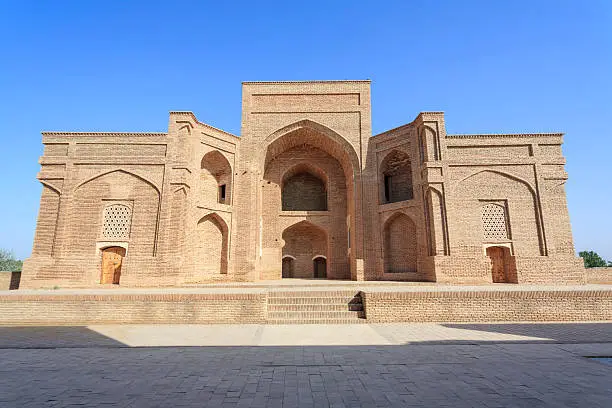
A dynastic necropolis of the Sayyids of Termez, the Sultan Saodat Complex brings together mausoleums, faience portals and prayer halls built between the 11th and 17th centuries, at the northwestern exit of Termez.
The Sultan Saodat Complex stands at the gates of Termez, in southern Uzbekistan, a few kilometers from the city center. A funerary and religious ensemble erected between the 11th and 17th centuries, it brings together mausoleums, mosques and portals around the tombs of the Sayyids of Termez—descendants of the Prophet who governed the region. It is one of the best-preserved medieval complexes in the lower Syr Darya valley.
Practical Information at a Glance
- Access: approximately 3 km northwest of Termez city center, accessible by taxi or private vehicle.
- Dress code: modest clothing required (shoulders and knees covered); women must cover their heads inside places of worship.
- Recommended duration: 45 minutes to 1.5 hours depending on your interest in architecture.
- Admission: paid entry (rates to be confirmed on site).
What You'll See
The complex consists of several buildings constructed at different periods, creating a layered architectural narrative. Notable features include:
- Domed mausoleums in fired brick, characteristic of Timurid and pre-Timurid style.
- A monumental entrance portal (pishtaq) adorned with blue and turquoise ceramics.
- Prayer halls still used by local pilgrims.
- Epitaphs and stucco ornaments finely carved inside the domes.
History and Context
The Sayyids of Termez formed an influential religious lineage that controlled the city and its surroundings from the 11th to the 16th century. Their tombs were progressively surrounded by commemorative buildings, transforming the site into a true dynastic necropolis. Multiple construction phases are visible in the masonry: the oldest sections date to the Karakhanid period, while the most recent additions belong to the late Timurid era.
Highlights of Your Visit
The Timurid Portal
The entrance iwan concentrates the most carefully crafted ornamentation in the complex: geometric faience tiles, Quranic inscriptions in Kufic and Thuluth calligraphy. The blue and white polychrome contrasts strikingly with the bare brick of neighboring mausoleums.
The Interior Domes
Beneath the domes, stucco muqarnas and networks of ribs reveal rare artisanal craftsmanship. Some chambers preserve traces of original paint on the pendentives.
The Pilgrimage Atmosphere
The site remains a place of living devotion. Uzbek and Afghan pilgrims come to pray here, particularly on Fridays. This active spiritual dimension sets Sultan Saodat apart from the region's purely archaeological museums.
Etiquette and Visiting Rules
- Remove your shoes before entering prayer halls.
- Speak quietly; prayers may be in progress.
- Do not photograph worshippers without their explicit consent.
- Women must cover their heads inside sacred spaces.
Photography Tips
Morning light (before 10 a.m.) directly illuminates the main portal and brings out the blues of the faience. In late afternoon, raking light reveals the stucco reliefs of the domes. The interior of the mausoleums is dark: a tripod or high ISO sensitivity is useful. Check photography restrictions with the guardian at the entrance.
Location and Access
The complex is located at the northwestern exit of Termez, near the road leading to the Afghan border. The city is connected to Tashkent by regular flights and train service. From Termez city center, a taxi will get you there in less than ten minutes. The site is not wheelchair accessible due to thresholds and earthen floors.
In the immediate vicinity, the Mausoleum of Hakim at-Termezi and the Termez Archaeological Museum naturally complement your visit.
Nearby Attractions
- Mausoleum of Hakim at-Termezi — tomb of the great 9th-century Sufi mystic, on the banks of the Amu Darya.
- Termez Archaeological Museum — Greco-Bactrian and Buddhist collections among Central Asia's richest.
- Kara Tepe Site — rock-cut Buddhist monastery from the 1st–4th centuries carved into cliffs overlooking the river.
- Fayaz Tepe Site — another Buddhist monastery with frescoes and sculptures, a few kilometers from Termez.
Frequently asked questions
Spring (March–May) and autumn (September–October) offer pleasant temperatures. Summer in Termez is very hot, with temperatures exceeding 40°C; plan to visit early in the morning.
Yes. Shoulders and knees covered for all visitors. Women must wear a headscarf inside prayer halls. Bring shoes that are easy to remove.
Yes. Sultan Saodat, Kara Tepe, Fayaz Tepe and the Mausoleum of Hakim at-Termezi are all accessible in one day with a taxi or private vehicle. Plan a full day to avoid rushing.
Generally yes for exterior architecture. Inside prayer halls, ask permission from the guardian. Never photograph worshippers in prayer without their consent.
Access is difficult: uneven floors, high thresholds and no ramps. The exterior grounds remain partially accessible, but the interior of the mausoleums is poorly adapted for wheelchairs.
Interested in this visit?
We can include it in your personalised itinerary.