Moynak
Moynak
Moynaq in Karakalpakstan was once an active port on the Aral Sea. Since the sea's retreat, its rusted boats stranded on salt have become a symbol of a global ecological catastrophe.
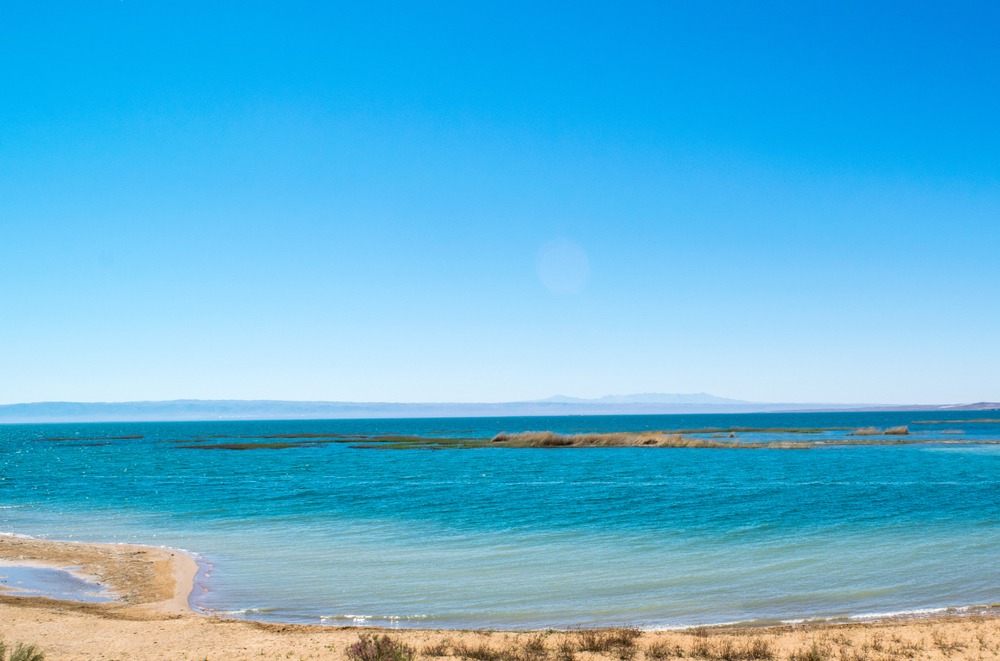
Moynaq is a former port city in Karakalpakstan, in the northwest of Uzbekistan. It once stood on the shores of the Aral Sea, one of the world's largest inland bodies of water. Today, the sea has receded several dozen kilometers: Moynaq now sits at the edge of a salt desert, the Aralkum. The graveyard of rusted boats scattered across the former seabed has become a worldwide symbol of one of the greatest ecological disasters of the 20th century.
Practical Information at a Glance
Access: from Nukus (capital of Karakalpakstan), by shared taxi or private vehicle — approximately 200 km on paved road.
Recommended duration: half-day to full day, depending on plateau exploration.
Dress code: no religious restrictions; wear closed-toe shoes for walking on salt and sand.
Equipment: plenty of water, sun protection — no services on the desert plateau.
Admission: the ship site is freely accessible; a local museum exists in town.
What to See
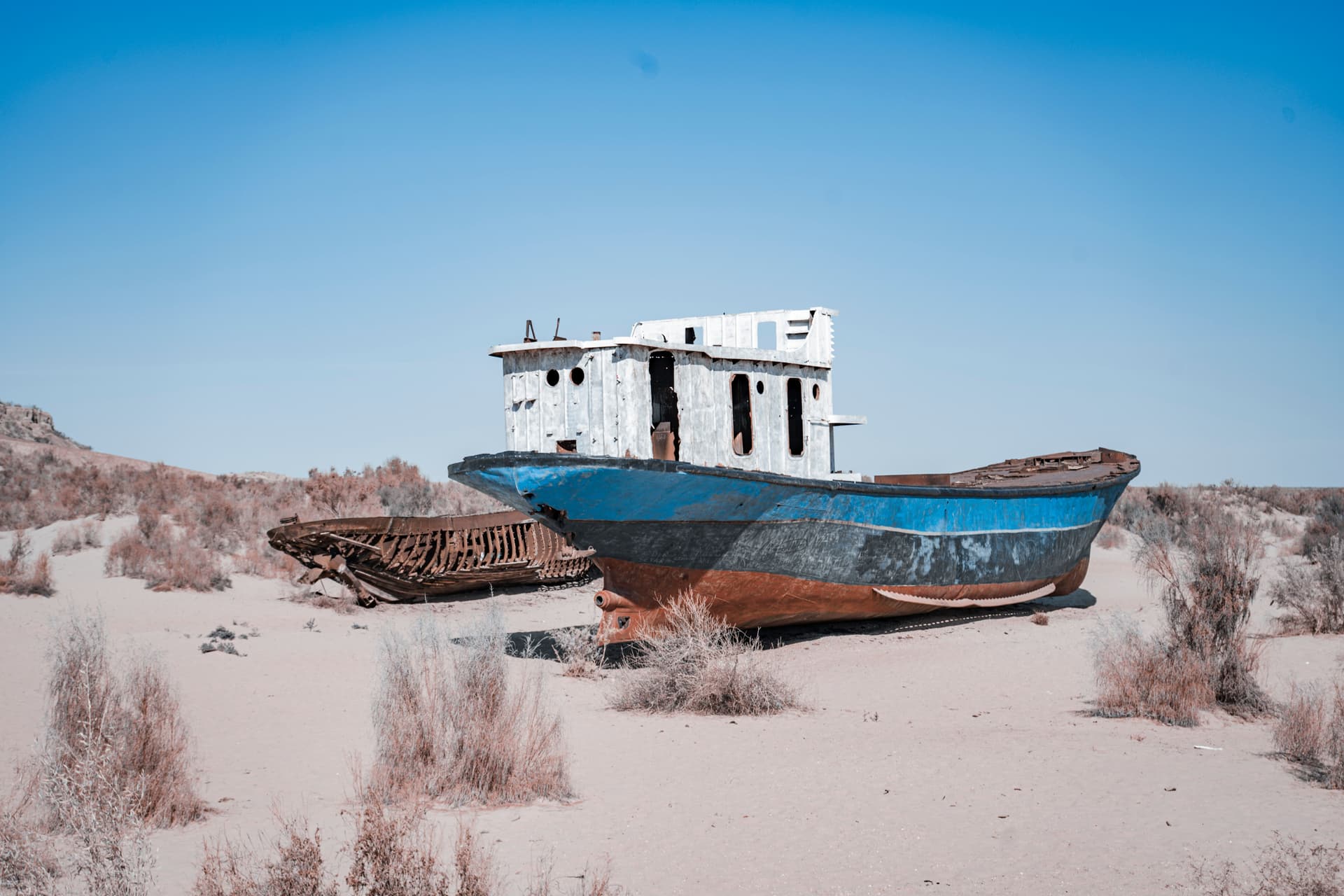
The most striking image is that of rusted fishing boat hulls, beached on a white ground of salt and sand. Around a dozen wrecks remain on the plateau, some still standing, others collapsed. In the distance, the Uchsay cliff marks the former shoreline. The Moynaq Museum traces the history of fishing and the ecological catastrophe through photographs and period artifacts.
History and Context
In the 1950s-1960s, the USSR massively diverted the Amu Darya and Syr Darya rivers to irrigate cotton crops. The Aral Sea, starved of its tributaries, began to shrink. Within decades, it lost over 90% of its volume. Moynaq, which had a significant fishing fleet and fish processing plant, became landlocked. The population largely abandoned the city; those who remain live in a ghost town surrounded by dust laden with salt and pesticides.
Highlights of Your Visit
The Ship Graveyard
The wrecks lined across the former seabed form the heart of the visit. Each hull tells the story of a vanished industry. You can approach them, climb on some structures — rust and salt have sculpted striking shapes. The atmosphere of silence and vastness is unforgettable.
The Aralkum Plateau
Beyond the boats stretches the Aralkum, a new desert born from the sea's retreat. The white salt ground, dotted with saxaul shrubs planted to stabilize the dust, offers a lunar landscape. Some guides offer excursions toward the former coastal cliff to see the fossil shoreline.
Moynaq Museum
Small but well-documented, the municipal museum features archival photographs showing Moynaq as an active port city, maps of the sea's retreat, and testimonies from fishermen. A useful stop to contextualize what you'll see later on the plateau.
Photography Tips
Morning and evening light is ideal: it tints the hulls in orange tones and casts long shadows on the white salt. At midday, the glare is intense — protect your lens. The wrecks photograph well in low-angle shots to emphasize their height. No known photography restrictions on the site.
Location and Access
Moynaq is located approximately 200 km north of Nukus, the capital of Karakalpakstan. The road is paved for nearly the entire journey. Most travelers arrange the visit from Nukus in a private taxi for the day. Regular and reliable public transport does not exist. Accessibility for visitors with reduced mobility on the desert plateau is limited due to uneven terrain.
Nearby Attractions
Nukus — the essential departure point, home to the Savitsky Museum, one of the world's most important collections of Russian avant-garde art.
Khorezm Fortresses — Zoroastrian strongholds scattered across the desert between Nukus and Khiva, accessible en route.
Khiva — a medieval museum city listed as a UNESCO World Heritage site, approximately 300 km south of Moynaq.
Frequently asked questions
Spring (April–May) and autumn (September–October) offer bearable temperatures. Summer regularly exceeds 40 °C on the plateau with no shade or water. Winter can be very cold with strong winds.
The site is freely accessible and the wrecks are visible without a guide. However, a local guide or driver familiar with the terrain is useful for navigating the plateau and accessing viewpoints of the former coastal cliff.
Yes, but the distance is significant. Most travelers do Nukus–Moynaq in a day, then head to Khiva the next day via Nukus or directly by the southern route.
Lodging options in Moynaq are very limited. Most travelers make a day trip from Nukus, where hotel options are far more abundant.
Dust containing salt and pesticides stirred up by the wind can irritate the respiratory tract. In strong winds, a mask or scarf is recommended. Bring plenty of water: no supply points exist on the plateau.
Want to discover this destination?
Our local advisors design your tailor-made trip.