Qibla Tozabog (Summer Mosque of Khiva)
Summer mosque of Ichan-Kala in Khiva, Qibla Tozabog captivates with its aiwan of sculpted wooden columns and its serene atmosphere away from crowds, in the heart of the UNESCO-listed old city.
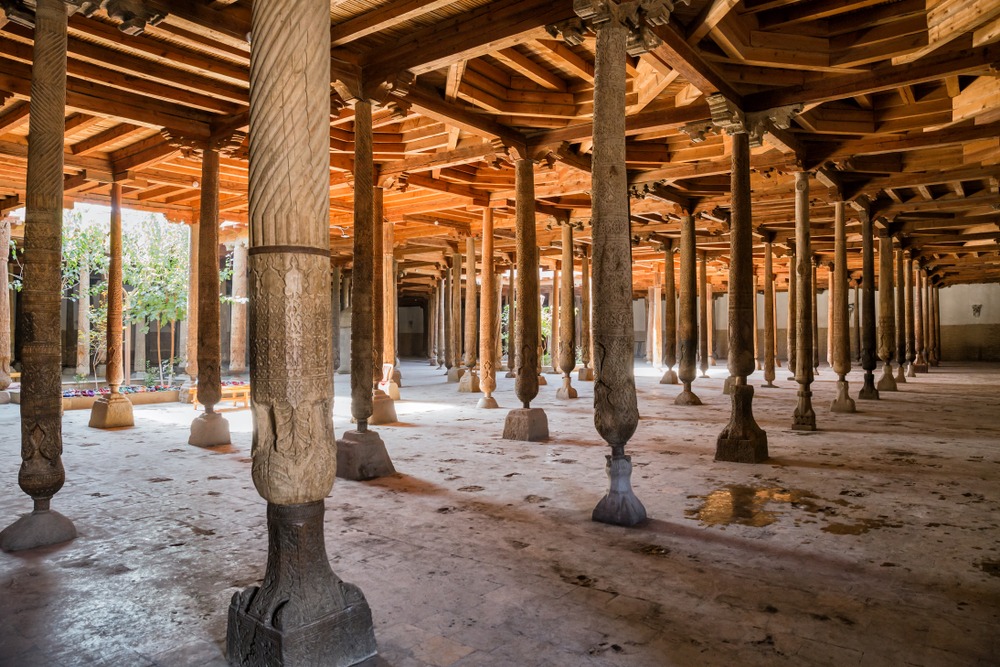
Qibla Tozabog is a summer mosque located within Ichan-Kala, the fortified old city of Khiva. Built during the era of Khiva's khans, it stands out for its aiwan—a portico with sculpted wooden columns—characteristic of Uzbek religious architecture. Less frequented than the Djuma Mosque or the Pakhlavan Mahmoud complex, it offers a more intimate glimpse into local artisanal craftsmanship.
What you'll see
The centerpiece is the aiwan: a covered gallery supported by finely sculpted wooden columns, typical of Khivan craftsmanship. The capitals and beams bear geometric and floral motifs carved by hand. The inner prayer hall, austere in character, contrasts beautifully with the decorative richness of the outer portico.
History and context
Khiva developed its own architectural style around woodworking, a rare material in this desert region. Summer mosques—open to the outdoors via an aiwan—were designed to respond to the region's extreme continental climate. Qibla Tozabog stands within this local tradition, preserved in Ichan-Kala, inscribed as a UNESCO World Heritage Site in 1990.
Highlights of your visit
The sculpted aiwan
The wooden columns are the centerpiece. Each shaft is adorned with different motifs, bearing witness to the individual work of the artisans. Take time to observe the details by approaching each column closely.
An off-the-beaten-path atmosphere
Unlike the flagship monuments of Ichan-Kala, Qibla Tozabog draws few visitors. It's one of the rare places in the old city where you can linger without crowds, especially in the middle of the day.
Etiquette and visiting rules
- Modest dress required: shoulders and knees covered for all visitors.
- Shoes: remove them before entering the inner prayer hall.
- Silence and discretion: the place remains active for prayer; adopt respectful behavior.
Photography tips
Morning light, coming at a low angle, brings out the relief of the carved columns. Photograph from within the aiwan toward the courtyard to capture the depth of the galleries. Check on-site whether photography is permitted inside the prayer hall.
Location and access
Qibla Tozabog is located within the Ichan-Kala, Khiva's fortified city. The entire old city is walkable; the mosque is accessible from the main entrance gates within a few minutes' walk. Access to Ichan-Kala is subject to a global entrance fee that covers most monuments.
Nearby attractions
- Djuma Mosque — famous for its 212 wooden columns, some dating from the 10th century.
- Pakhlavan Mahmoud Mausoleum — funerary complex with turquoise domes, an important pilgrimage site.
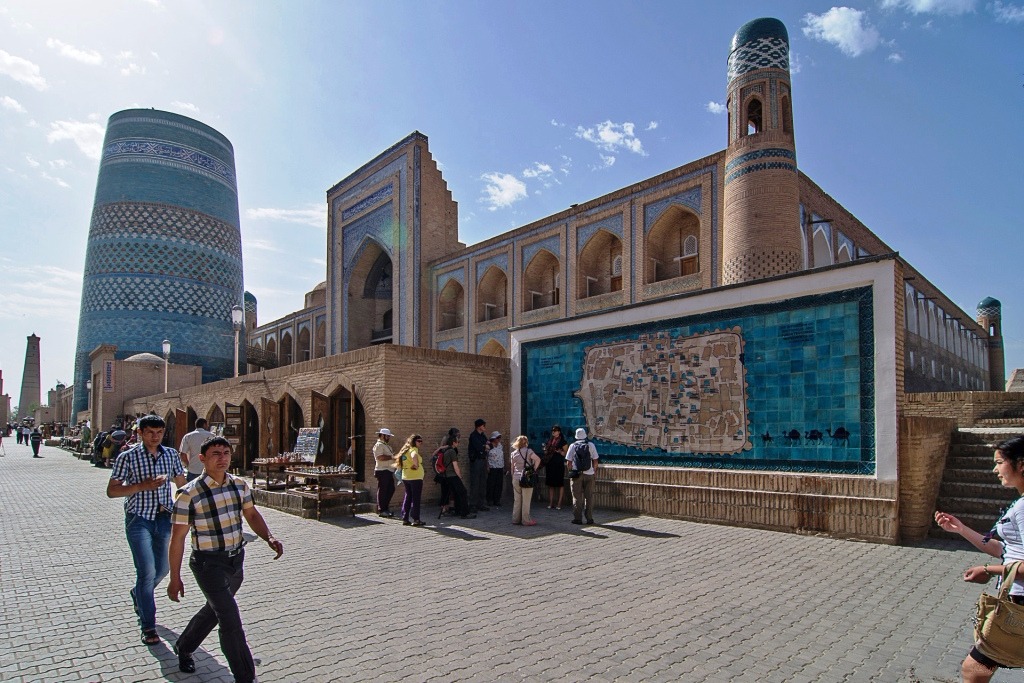
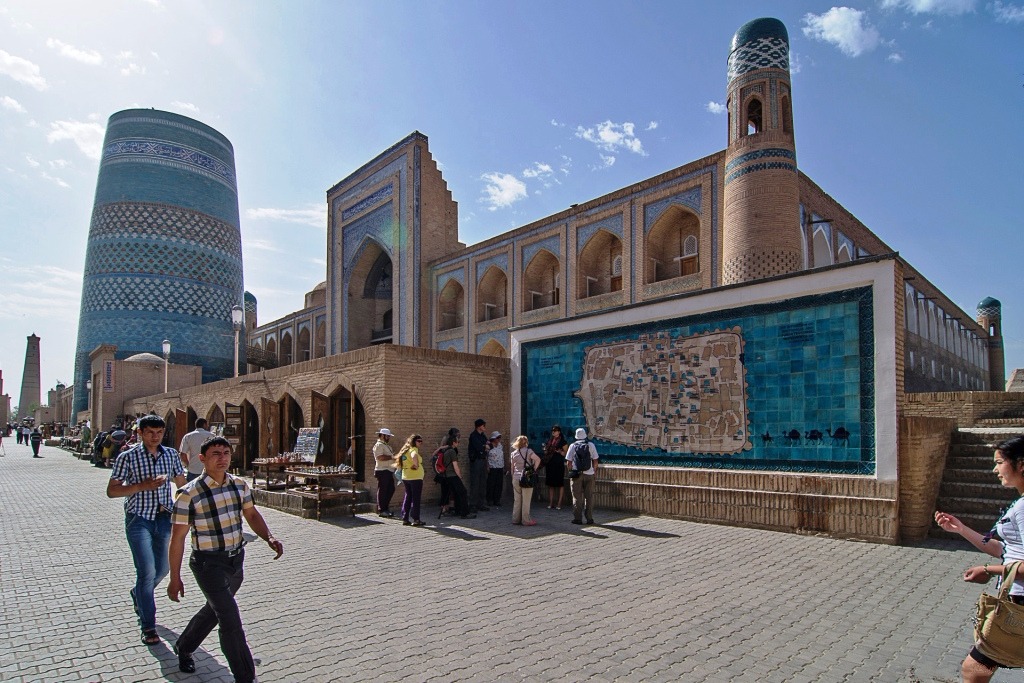
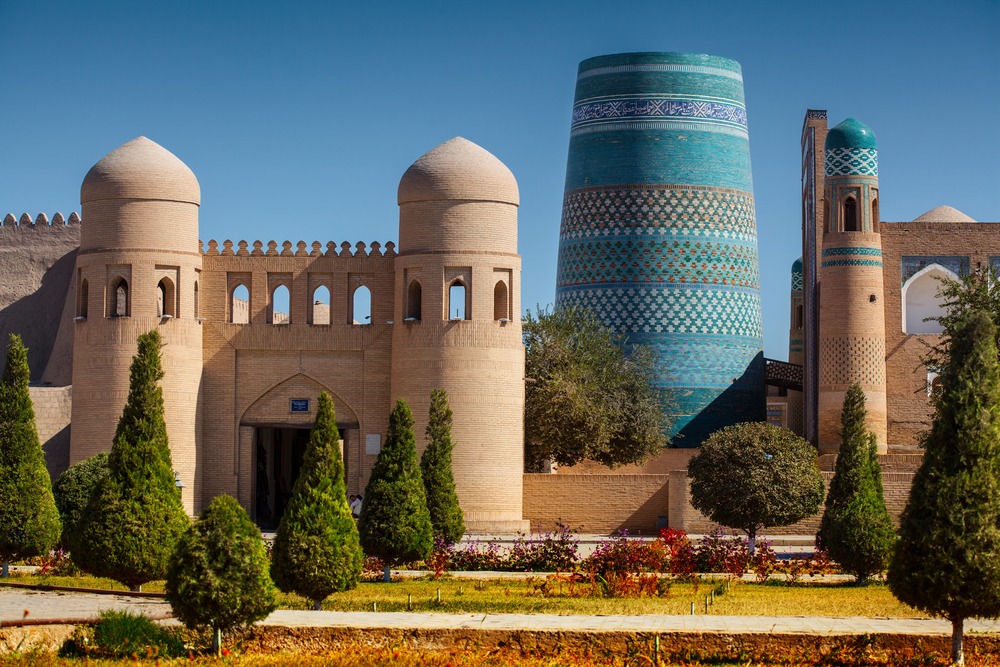
- Kalta Minor Minaret — unfinished minaret with blue ceramic cladding, Khiva's iconic symbol.
- Tach-Khauli Palace — 19th-century residence of the khans, with richly decorated interior courtyards.
Frequently asked questions
The mosque is located within Ichan-Kala, and access is covered by the global entrance ticket for the old city. Check on-site if specific access is required.
Shoulders and knees covered for everyone. Women may need a scarf to enter the prayer hall. Wear shoes that are easy to remove.
Spring (April–May) and autumn (September–October) offer pleasant temperatures. Summer often exceeds 40°C in this desert region.
Yes. The Djuma Mosque and Pakhlavan Mahmoud Mausoleum are within a few minutes' walk. The entire Ichan-Kala can be comfortably visited in a single day.
Photography is generally permitted in outdoor spaces and beneath the aiwan. Ask for permission before photographing inside the prayer hall.
Nearby
Interested in this visit?
We can include it in your personalised itinerary.