
Registan Square
Registan Square
Registan brings together three madrasas from the 15th–17th centuries around a monumental square in the heart of Samarkand. Blue ceramics, gilt details, and Timurid geometry: a UNESCO-listed ensemble and the visual symbol of Ouzbékistan.
At the heart of Samarkand, Registan is one of Central Asia's grandest monumental squares. Three madrasas from the 15th to 17th century frame it, all adorned with brilliant blue and turquoise ceramics. Listed as a UNESCO World Heritage site, this ensemble embodies the pinnacle of Timurid architecture and remains the visual symbol of Ouzbékistan.
Practical information at a glance
- Entrance: Paid admission (single ticket covers all three madrasas)
- Recommended duration: 1.5 to 2 hours to explore all three buildings
- Dress code: No strict requirements, but neat attire is recommended
- Access: Downtown Samarkand, within walking distance of most central hotels
- Sound and light show: Evening spectacle offered during the tourist season (check dates on site)
What you'll see
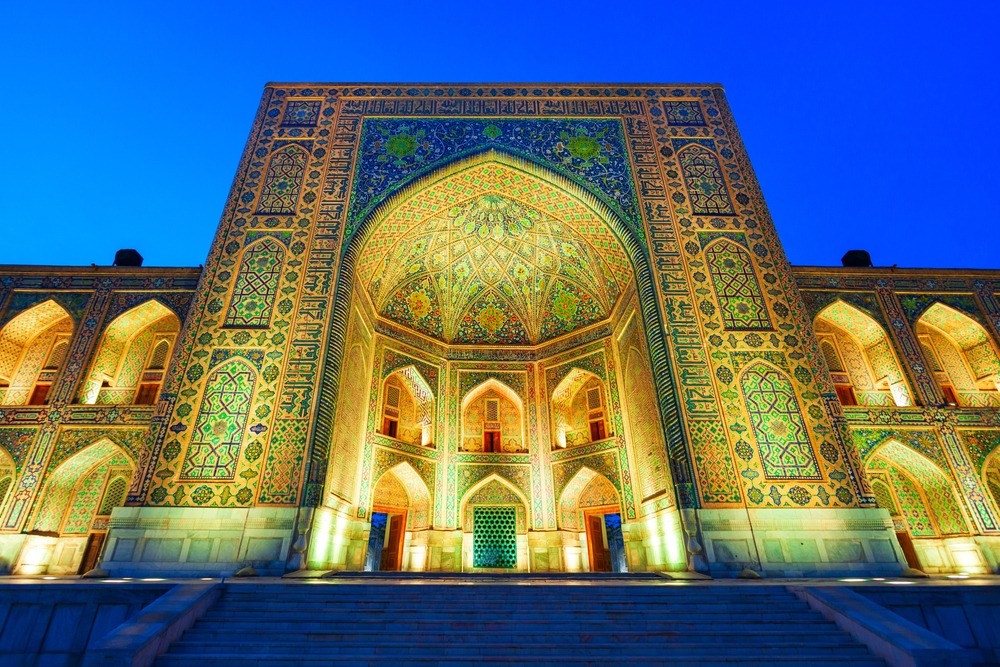
The square is bordered by three distinct madrasas. The Ulugh Beg Madrasa (1420) is the oldest; its portal is decorated with geometric and astronomical motifs, reflecting the ruler's interest in science. Across from it, the Shir Dor Madrasa (1636) stands out for its figurative mosaics depicting lions and human-faced suns—a bold gesture rare in Islamic art. The Tilla-Kari Madrasa (1660) closes off the northern side; its interior shelters a mosque with a gilded ceiling.
History and context
The word "Registan" means "place of sand" in Persian. The square served as a commercial and civic center under the Timurids, then under the Shaybanids. Ulugh Beg, the grandson of Timur, commissioned the first madrasa here and made it an intellectual hub radiating influence across Persia and India. The two other madrasas were built two centuries later by the Janids, who sought to rival Timurid grandeur.
Highlights of the visit
The Ulugh Beg Madrasa portal
The ten-pointed star mosaics and Quranic inscriptions on the portal illustrate Timurid mastery of girih, this complex geometric paving system. The central iwan reaches an imposing height, framed by two slightly tilted minarets.
The lions of Shir Dor
The name "Shir Dor" means "bearing lions." The two stylized felines hunting deer, with a human-faced sun on their backs, constitute unique iconography in Central Asian Islamic architecture. Their presence speaks to an artistic freedom characteristic of Samarkand's school.
The gilded interior of Tilla-Kari
The interior mosque of the Tilla-Kari Madrasa is entirely covered in gilt. The mihrab and the muqarnas ceiling painted in gold create a trompe-l'œil effect of depth. It is among the richest interiors in Ouzbékistan.
The square at sunset
In late afternoon, raking light causes the ceramics to shift from cobalt blue to deep turquoise. This is when the facades best reveal the relief of the mosaics and the precision of the calligraphy.
Photography tips
Early morning light (before the crowds arrive) is ideal for photographing the Ulugh Beg facade without backlighting. In late afternoon, the sun hits Shir Dor and Tilla-Kari directly. To frame all three madrasas together, step back to the center of the square. The interiors are dim: a tripod or high ISO sensitivity is useful for Tilla-Kari.
Location and access
Registan is located in Samarkand's historic center, steps away from the Siab Bazaar and the Bibi-Khanym Mausoleum. The railway station (high-speed trains from Tashkent) is accessible by taxi or local transport. The site is partially accessible to people with reduced mobility on the outer square; access to the madrasas' upper floors involves narrow stairs. Licensed local guides offer guided tours departing from the square.
Nearby attractions
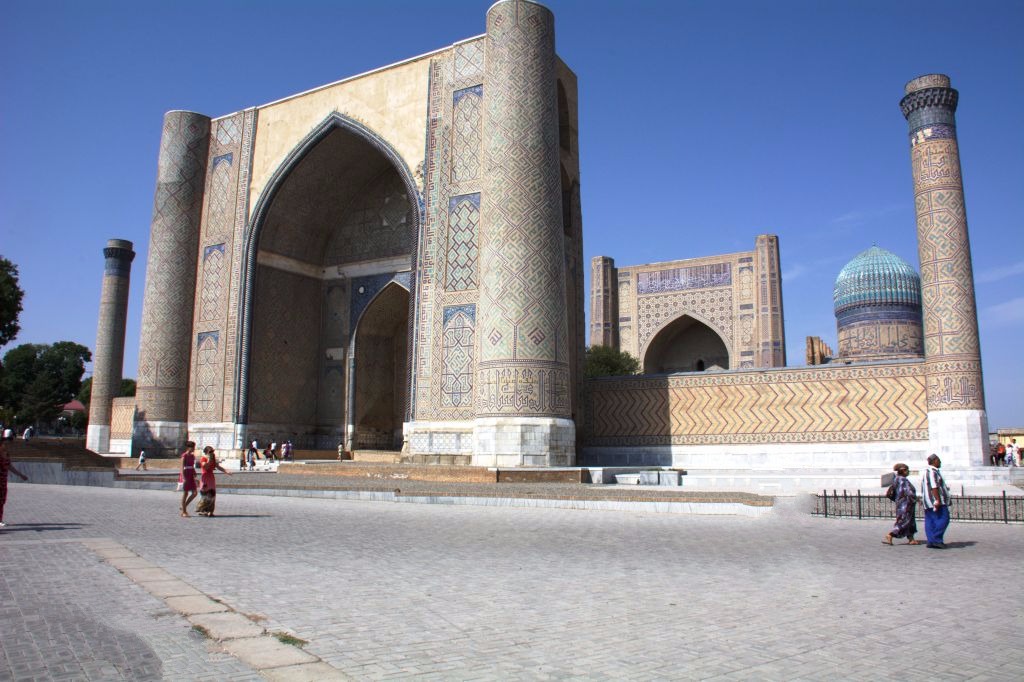
- Bibi-Khanym Mausoleum — a colossal 15th-century mosque built by Timur, a few minutes' walk to the north.
- Siab Bazaar — a lively covered market where locals shop, ideal for spices, non bread, and dried fruits.
- Shah-i-Zinda Necropolis — an avenue of mausoleums with some of Samarkand's finest ceramics, about 1 km to the northeast.
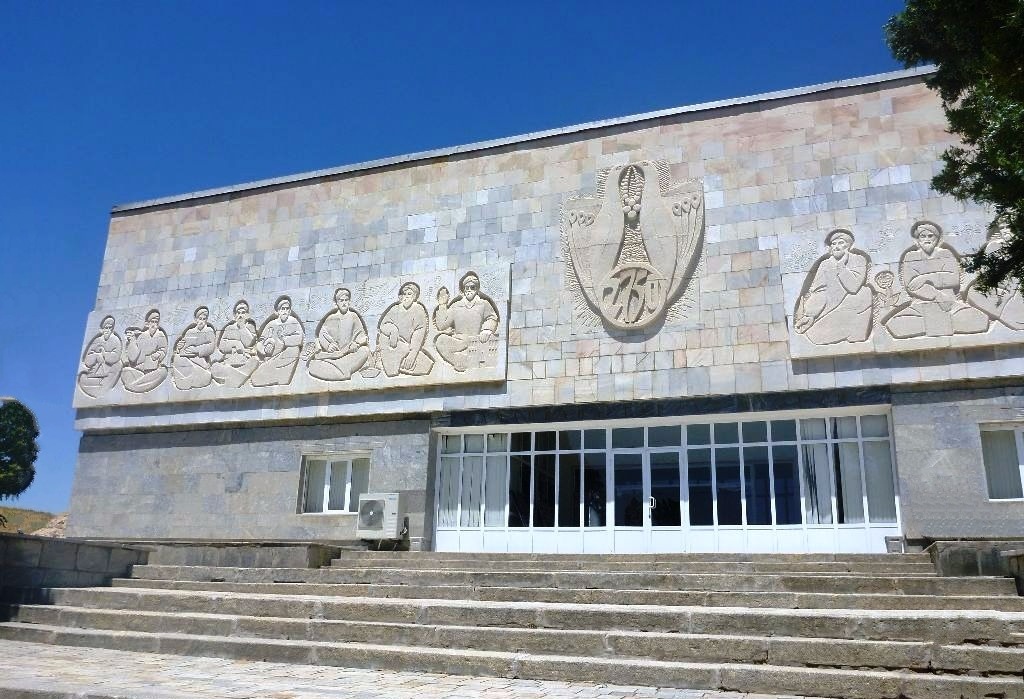
- Ulugh Beg Observatory — remains of the 15th-century astronomical observatory, with a museum dedicated to the astronomer-ruler.
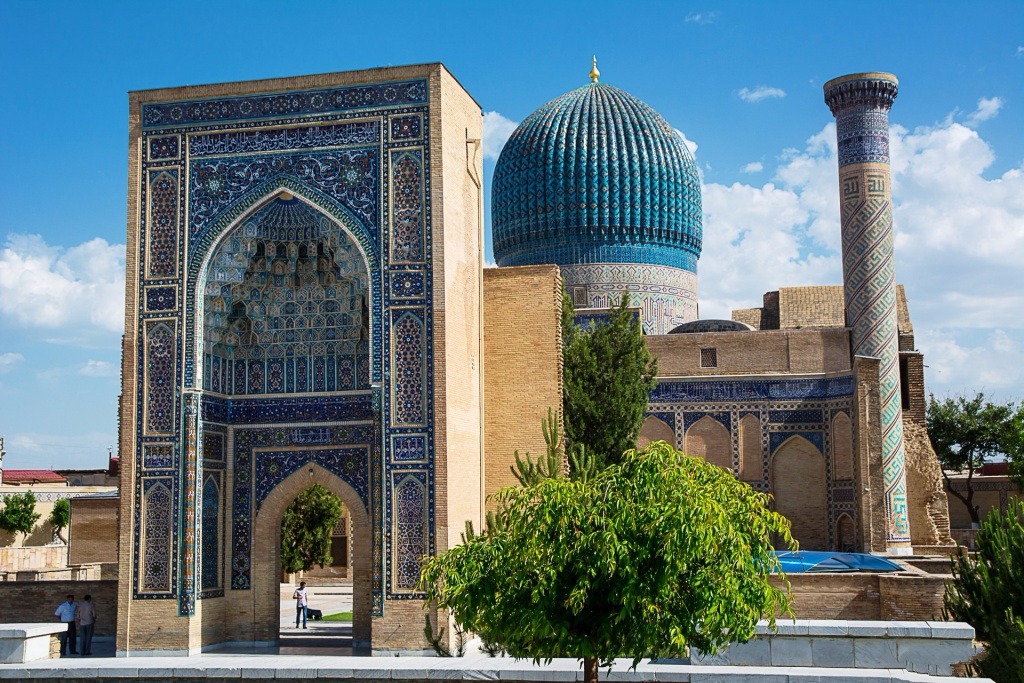
- Gur-Emir Mausoleum — the tomb of Timur and his lineage, a few hundred meters to the southwest.
Photos
Nearby
Interested in this visit?
We can include it in your personalised itinerary.